
Many people have had this experience:
“I really want to quit smoking, but whenever I’m under a lot of stress, I just can’t resist.”
You know smoking is bad for your health. You may have tried smoking less, quitting, or switching to e-cigarettes, but before long, you find yourself smoking again.
In fact, difficulty quitting smoking is not simply a matter of “willpower.”
One important reason is nicotine dependence.
1. Why Is Quitting Smoking So Difficult?
After nicotine from cigarettes enters the body, it stimulates the brain to release dopamine, which can create feelings of relaxation and pleasure.
With long-term smoking, the body gradually becomes accustomed to nicotine.
When nicotine intake is suddenly stopped, you may experience:
Strong cravings for cigarettes
Irritability or anxiety
Difficulty concentrating
Mood changes
Headaches or dizziness
Changes in sleep
Increased feelings of stress
These are commonly known as nicotine withdrawal symptoms.
So, for some people, it is not that they do not want to quit—their bodies have already developed a dependence on nicotine.
2. What Is ニコチネルTTS in Japan?
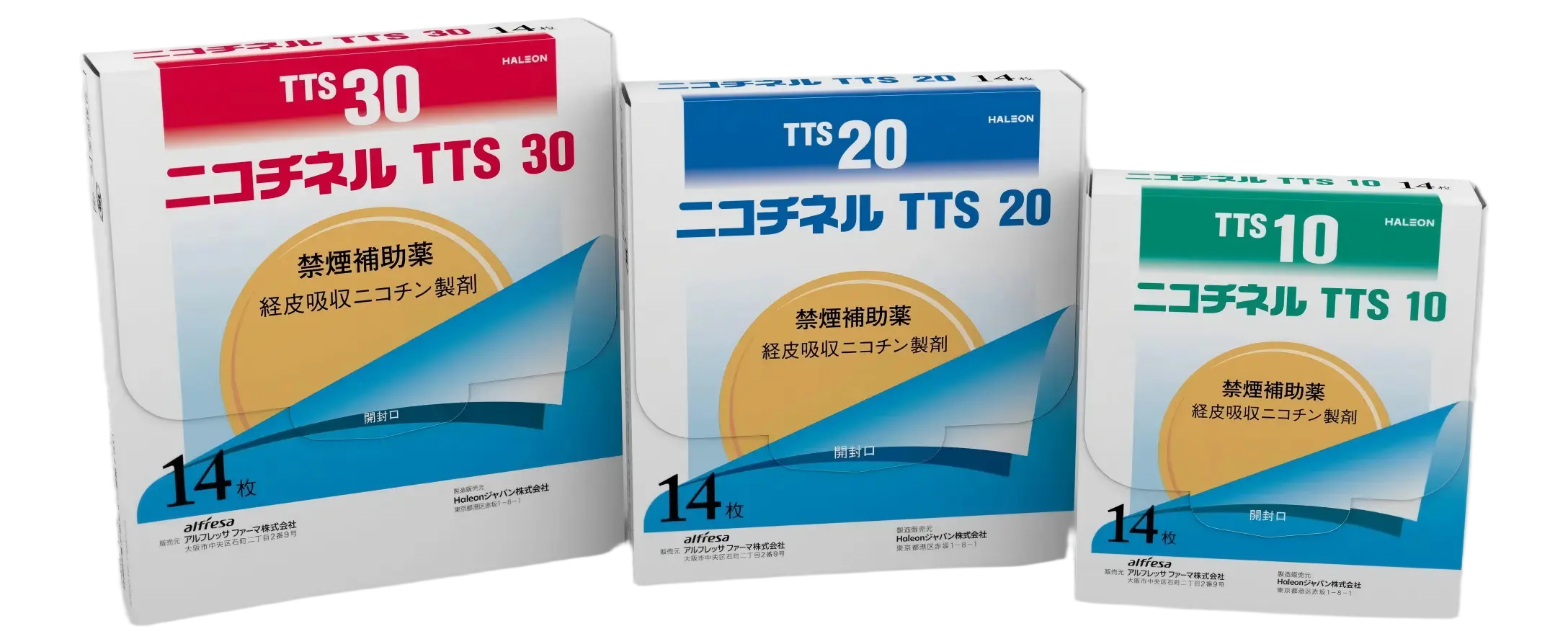
In Japan, there is a transdermal nicotine product used as an aid to smoking cessation:
ニコチネルTTS
Its active ingredient is:
Nicotine
Unlike smoking a cigarette, nicotine patches deliver nicotine through the skin over time, helping reduce withdrawal symptoms during the smoking cessation process.
Simply put:
Instead of continuing to smoke, the patch is used during the quitting process to help the body gradually adapt to life without cigarettes.
3. What Strengths of ニコチネルTTS Are Available?
There are three main strengths:
ニコチネルTTS30
Nicotine content:
52.5 mg per patch
Generally used during the initial stage of smoking cessation.
ニコチネルTTS20
Nicotine content:
35 mg per patch
Generally used during the gradual reduction stage.
ニコチネルTTS10
Nicotine content:
17.5 mg per patch
Generally used during the final reduction stage.
4. How Is It Usually Used?
According to the Japanese prescribing information, the standard regimen gradually reduces the nicotine dose:
Weeks 1–4
ニコチネルTTS30
↓
Weeks 5–6
ニコチネルTTS20
↓
Weeks 7–8
ニコチネルTTS10
Normally:
Apply one patch once daily and wear it for 24 hours.
If dose reduction is necessary during the first four weeks, TTS20 may be used.
The prescribing information also states:
Do not continue treatment for more than 10 weeks.
5. How Does It Help With Smoking Cessation?
The basic mechanism of ニコチネルTTS can be understood as:
Providing a steady supply of nicotine → reducing nicotine withdrawal symptoms → helping reduce dependence on cigarettes → supporting smoking cessation.
Therefore, it is not intended to:
Improve alertness
Promote weight loss
Increase energy
Its primary purpose is:
To help smokers quit smoking.
6. Where Should the Patch Be Applied?
The patch can generally be applied to:
Upper arm
Abdomen
Lower back
Important:
Change the application site every day and avoid repeatedly applying the patch to the same area.
The skin should be clean and dry before application.
After bathing, make sure the skin is completely dry before applying the patch.
7. Can You Still Smoke While Using the Patch?
No. Smoking should be avoided.
The Japanese prescribing information states that patients should not smoke while using the product.
Cigarettes already contain nicotine. Using nicotine patches while continuing to smoke may increase nicotine exposure and may enhance effects on the cardiovascular system.
Therefore:
Using a nicotine patch does NOT mean you can continue smoking while wearing it.
The intended use is:
To help relieve withdrawal symptoms during the process of quitting smoking.
8. Who Should Take Extra Care?
Although ニコチネルTTS is used to support smoking cessation, it is not suitable for everyone to use without medical advice.
For example, people with:
High blood pressure, heart disease, arrhythmia, cerebrovascular disease, heart failure, or peripheral vascular disease
should consult a doctor before use.
People with conditions such as:
Diabetes
Peptic ulcers
Epilepsy
Liver dysfunction
Kidney dysfunction
should also be evaluated by a doctor based on their individual circumstances.
9. Who Should Not Use It?
The following people should not use this product:
❌ Non-smokers
❌ Pregnant women or women who may be pregnant
❌ Breastfeeding women
❌ People with unstable angina
❌ People who have had an acute myocardial infarction within the previous 3 months
❌ People with severe arrhythmia
❌ People immediately after percutaneous coronary intervention
❌ People immediately after coronary artery bypass surgery
❌ People in the early recovery period following cerebrovascular disease
❌ People with a history of hypersensitivity to any ingredient in the product
10. What Side Effects May Occur?
Possible side effects include:
Skin-related reactions
Redness
Itching
Contact dermatitis
Swelling
Blisters
Other possible symptoms
Nausea
Vomiting
Abdominal pain
Headache
Dizziness
Fatigue
Palpitations
Increased blood pressure
Some people may also experience:
Insomnia, abnormal dreams, or anxiety.
If significant symptoms occur, stop using the product and consult a doctor.
11. Why Should You Pay Attention to Nighttime Use?
ニコチネルTTS is normally worn continuously for 24 hours.
However, because nicotine continues to be absorbed during the night, some people may experience:
Insomnia, sleep disturbances, or abnormal dreams.
If significant sleep problems occur, the Japanese prescribing information recommends discontinuing the product.
12. Be Careful With Saunas and Intense Exercise
This is something many people may overlook.
The Japanese prescribing information specifically recommends:
Removing the patch before using a sauna or engaging in intense exercise.
Increased body temperature may increase nicotine absorption and potentially increase the risk of excessive nicotine exposure.
Extra caution is also required when you have a fever.
13. Final Reminder: A Patch Alone Does Not Guarantee Successful Smoking Cessation
The role of a nicotine patch is:
To support smoking cessation.
Long-term success in quitting smoking also depends on:
Motivation to quit + a smoking cessation plan + medical guidance + lifestyle changes.
The Japanese prescribing information also emphasizes that smoking cessation success depends on the quality and frequency of smoking cessation guidance.
Therefore, if you have tried to quit several times but repeatedly started smoking again, consider consulting a doctor about whether nicotine patches or other smoking cessation treatments are appropriate for you.
One-Sentence Summary
ニコチネルTTS is not simply an ordinary “quit-smoking patch.” It is a transdermal nicotine medication used in Japan to support smoking cessation.
By gradually reducing the nicotine dose, it can help smokers manage withdrawal symptoms during the quitting process and work toward overcoming nicotine dependence.
If you want to quit smoking, the first step is not simply to “smoke one less cigarette,” but to create a realistic smoking cessation plan that you can stick to.
⚠️ This article is intended for general medication information and educational purposes only and does not constitute medical diagnosis or treatment advice. ニコチネルTTS is a medical product and should be used according to the Japanese prescribing information and under the guidance of a doctor. Pregnant women, breastfeeding women, non-smokers, and people with cardiovascular conditions should pay particular attention to contraindications and potential risks.