
As people grow older, gradual memory loss, slower reactions, and reduced judgment have become a reality many families have to face.
Cognitive impairment related to Alzheimer’s disease often develops quietly over time, yet it can affect almost every aspect of daily life without being immediately noticed.
In clinical practice, long-term and well-managed medication use is considered one of the important ways to slow disease progression and help maintain quality of life.
Today, we would like to introduce a prescription medication that has been widely used in Japan —
Exelon® Rivastigmine Transdermal Patch 4.5 mg.
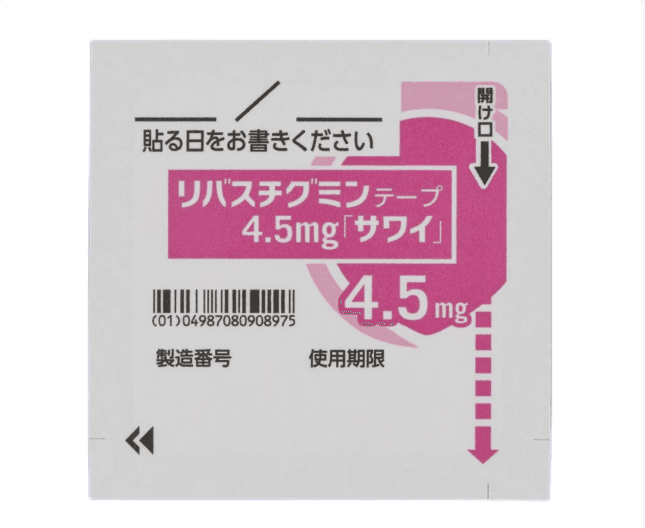
Rivastigmine (Exelon®) Transdermal Patch 4.5 mg “Sawai”
Helps support memory function, reduce forgetfulness, and assist normal brain activity.
What conditions is it mainly used for?
Rivastigmine is commonly prescribed for mild to moderate Alzheimer’s-type dementia.
After evaluation by a physician, it is typically used in individuals experiencing gradual declines in memory, attention, and overall cognitive function.
With continuous and appropriate use, it helps support communication between brain cells and may, to a certain extent:
Slow further memory decline
Improve attention and responsiveness
Help maintain daily cognitive function
It is important to understand that this type of medication does not cure the disease. However, when used as directed, it may help slow symptom progression and keep the condition more stable over time.
Why choose a transdermal patch?
In real-world use, many patients and caregivers prefer the patch form for practical reasons.
Compared with oral medication, transdermal patches offer several advantages:
More stable medication release
Once-daily application, simple to use
Less irritation to the gastrointestinal system
Better suited for people with swallowing difficulties or poor medication adherence
By being absorbed gradually through the skin, the patch helps reduce fluctuations in drug levels and allows the body to adapt more smoothly.
Simple to use, but proper use is important
In most cases, treatment starts at 4.5 mg per day:
Replace the patch every 24 hours
Apply to intact skin on the back, upper arm, or chest
Rotate application sites daily to avoid repeated skin irritation
Any dose adjustments should be determined by a physician based on tolerance and changes in the patient’s condition.
Possible side effects
Most users tolerate the patch well. However, some individuals may experience:
Mild redness or itching at the application site
Reduced appetite or nausea
Mild dizziness or fatigue
If symptoms are noticeable or persist, medical advice should be sought. Do not stop or adjust the medication without consulting a healthcare professional.
Who may be considered for use?
After professional assessment, Rivastigmine transdermal patches may be considered for individuals who:
Show noticeable memory decline
Frequently forget things or ask the same questions repeatedly
Experience reduced judgment or executive function
Have been diagnosed with mild to moderate Alzheimer’s-type dementia
All medications for cognitive disorders should be used under medical supervision.
Product information
Product name: Exelon® Rivastigmine Transdermal Patch
Strength & pack size: 4.5 mg × 14 patches
Country of origin: Japan
Dosage form: Transdermal patch
Dosing frequency: Once daily
Final note
Changes in cognitive function do not happen overnight and should not be overlooked.
The earlier proper management begins, the greater the chance of slowing progression and maintaining quality of life for a longer period.
When facing cognitive impairment,
appropriate medication use, patient companionship, and ongoing communication
are often the most important and realistic forms of support for families.
This content is for health information purposes only and does not replace professional medical diagnosis or treatment advice.