
Many people first discover that they have high blood pressure during a routine health check-up.
Usually, they don’t feel anything serious in daily life, but then the doctor says:
“Your blood pressure is a bit high.”
Some people may often feel dizzy, a sense of pressure in the head, chest tightness, or a fast heartbeat. However, others may not feel any symptoms at all.
Amlodipine (Norvasc), known as “络活喜” in Chinese, is a very commonly prescribed antihypertensive medication in hospitals.
Many patients with hypertension are already familiar with this name.
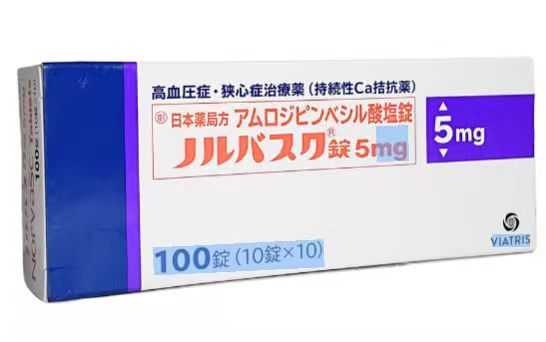
Norvasc (Amlodipine Besylate) Tablets 5mg – 100 Tablets
Class: Calcium channel blocker (CCB)
What is Norvasc (Amlodipine)?
Simply put, it is a medicine that helps lower blood pressure.
Its main ingredient is called amlodipine, and its effect is actually quite simple:
It helps relax tightened blood vessels.
When the blood vessels relax, blood flows more easily, and blood pressure gradually goes down.
That’s why after taking it for a while, some people may feel:
“My head feels less dizzy.”
“My chest feels less tight.”
It is not a medicine that works instantly. Instead, it works slowly and steadily, making it suitable for long-term blood pressure control.
Who is it suitable for?
The most common use is for hypertension (high blood pressure).
Especially for people who:
Are in their 40s or 50s and older
Stay up late often
Eat salty or heavy-flavored food
Are under a lot of stress
Are overweight
These factors can gradually raise blood pressure.
Some people may also experience:
Headaches
Dizziness
Palpitations
Chest tightness
Fatigue
When they go to the hospital, they find out their blood pressure is already high.
It is also sometimes prescribed for people with coronary heart disease or angina.
Why do many people take it for years?
Because in most cases, high blood pressure cannot be completely “cured.”
Many people think:
“I feel normal now—can I stop taking it?”
But often, it’s not that the condition is gone, but that the medication is controlling it.
If you stop taking it, blood pressure may gradually rise again.
So hypertension is more like long-term management.
The advantage of this medication is that it is stable and usually taken once a day, making it easy for many people to continue long-term.
Are there side effects?
Some people may notice effects when they first start taking it, such as:
Swollen ankles
Warm or flushed face
Mild dizziness
Slightly faster heartbeat
For some people, these symptoms improve after a few days of adjustment.
However, if the symptoms are strong or persistent, you should consult a doctor and not stop or change the medication on your own.
Is medication enough?
Doctors often say:
“Medication is important, but lifestyle matters too.”
For high blood pressure, daily habits play a big role, such as:
Eating too much salt
Staying up late
Smoking or drinking alcohol
Lack of exercise
High stress
All of these can affect blood pressure.
So many people eventually realize:
Taking medication regularly, plus improving sleep and reducing salt intake, can help stabilize blood pressure much better.
Final note
Norvasc is one of the most commonly used blood pressure medications, and many patients use it long-term.
Its main advantages are stability and once-daily dosing.
However, there is no such thing as “what works for others will definitely work for me.”
How and whether to take it should always follow a doctor’s advice.
Because the biggest risk with blood pressure is not a temporary rise—it is staying high for a long time without control.